Welcome to my blog!

Welcome to Olivia’s View.

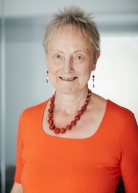
Olivias photo

This blog is my own personal view of donor conception:  the issues, the questions, my reflections on family life, plus comments on media coverage and events: I’m one of the co-founders of DC Network and mother to two sons and a daughter, now adults, conceived both with and without donor help. The views expressed here  are not necessarily those of DC Network.

Meet my family:  Husband Walter, he’s Chair of DC Network and used to be on the board of the HFEA;   eldest son Peter from my first marriage, married to Emily and parents to our lovely grand-daughter, younger son Will and daughter ‘Zannah…then there’s Milo, a seriously noisy and annoying but ultimately lovable Siamese cat

Posted in Uncategorized | 4 Comments

Reflections on thirty years of donor conception parenting

Tomorrow is the 30th birthday of our first donor conceived child – our now very adult son Will.  Apart from having yet another child pass a landmark birthday that firmly places his parents in the oldie camp, it is interesting to think about what remains the same and what is now very different for those contemplating donor conception from when we first embarked on it.  I was also asked to think about this earlier today for an introduction to an article from the DC Network archives that is being re-printed for its relevance for todays parents.

What remains the same are the anxieties that potential and actual parents have about bringing a child into the world conceived in a ‘different’ way plus issues to do with bonding and rejection and fears about openness and telling.  What is very different is a cultural and social climate where donor conception is discussed in the media and endless information and contact with others is available via the internet.  That, and the resources that have been developed by DC Network over the years to support families.  When Walter and I were contemplating using a donor there was just one book, Robert Snowden’s A Gift of a Child, to help normalise our situation and guide us with language to start telling our children.  And that is another enormous change.  Walter and I were very unusual in deciding that it would be wrong to keep the fact of donor conception from our children.  Now ‘telling’ is the default position with those keeping a secret finding themselves on the back foot and having to defend their position.

Both Will and Zannah, despite their different attitudes to finding out information about their donors or half-siblings (basically Will isn’t interested and Zannah is) are clear that being told about their conception from an early age made them feel respected, loved and wanted.  They certainly were…and are our beloved children, as is our older son from my first marriage.

Happy Birthday Will.

Posted in Uncategorized | Tagged , , , , , | Leave a comment

The HFEA ‘gets it’ at last!

Some of us were left with rather bemused expressions on our faces following a meeting called by the HFEA yesterday to discuss various matters to do with donor conception.  Many of us present had been battering for years at what felt like a tightly shut door on issues such as counselling and intermediary support services for applicants to the Register, improving the collection and sharing of donor information, re-registration of donors and generally improving information about donation.  Now, led by the splendidly orange-shoe shod Juliet Tizzard, here they were about to put a paper to the July meeting of the Authority on all these issues…and more…but looking to consult with representatives from all the major organisations involved beforehand!  What were we to make of it?  Tucking my cynical tendencies carefully out of sight, I joined the others in applauding this fresh breeze blowing through our regulator, now finding a new energy following it’s release from the uncertainty over it’s future.  It even seemed possible to raise questions such as the inclusion of children in the family of a donor on, if not the main register, the Donor Sibling Register, so that they could have the chance of finding half-siblings if they chose to do so; and reinstating the possibility of recipients having their donor number so that they can make contact, by mutual consent, with other families using the same donor.  Raised in the context of single women choosing to import sperm from America because of the possibility of sibling tracing via the Donor Sibling Registry and the generally held view that using a UK donor has advantages for all concerned, interest was shown.

There was an interesting discussion  about the pros and cons of providing both pen portrait and letter-to-the-child information to recipients at the point of choosing a donor.  Although Regulations say that this should happen, many clinics actually deny recipients full information until a pregnancy is established.  Jackson Kirkman-Brown, who runs the sperm donation service in Birmingham, argued powerfully that the quality of the information provided by donors in the child’s letter is considerably reduced by the need for it to contain nothing that can identify the person and because donors know that the parents will see it.  This was not a decision-making meeting, but the very well made point will be taken back, as will the one I made that not all potential parents want ALL of the information about their donor at the time of treatment.  Some prefer simply to match generally on physical characteristics but to leave the discovery of other information for their children in the future.  This information came as a surprise to some present.

It looks as if the HFEA is going to take up the Nuffield Council on Bio-Ethics recommendation that they set up a separate web site simply for unbiased information on donation matters, starting with donors, the poorest served group in the donation triangle.  It will be very interesting to see how they tackle the issue of ‘telling’…or actually ‘not telling’…Nuffield being very keen that this group’s needs and concerns should be recognised.

With a hint that there might actually be some money around to do things…although no promises made, we all left a little bit lighter in spirit if not in body…those free ice-creams went down a treat!

Posted in Uncategorized | Tagged , , , , , , , | Leave a comment

New talking with family and friends booklets now available

Had a brilliant evening at the Nuffield Foundation’s elegant headquarters in London last night launching the new booklets about talking with friends and family and celebrating DC Network’s 20th anniversary.  Very sadly Dame Suzi Leather was unable to be with us because of serious illness in her family but Marilyn Crawshaw stepped into the breach and because of her close involvement with the Network was able to give a knowledgable account of the role and place of the organisation on both the national and international stages.  We were delighted to have present Melanie Johnson the Labour Health Minister who took the courageous decision to end anonymity for donors.  It was interesting to hear from her that this was indeed a decision that was completely down to her and that she looks back on it as one of the highlights of her political career.  Other important guests were Angela and Andy Mays and Jane and Neil Offord, who, together with Dr Sheila Cook (also there with her husband Ian) wrote the My Story book for children which brought the founding members of DC Network (then DI Network) together.

The short film we showed truly captured the essence of DC Network and brought a tear to the eyes of most people in the room.  I will add a link here very shortly and it will be on DCN’s web site within a few days.  Although I have had pdfs of the booklets for a while, this was the first time I had seen them in print and it was thrilling.  In the A4, clean cut style of the first four Telling and Talking booklets, they have distinctive covers featuring illustrations rather than photographs and look like a pair…as indeed they were meant to.  They are now available to be bought singly or as a (discounted) bundle in pdf or printed form from DCN’s website http://www.dcnetwork.org

As I said last night, these booklets have been a long time in the making, it being 2009 when the idea of writing something about talking with friends and family was first enthusiastically welcomed by families and professionals alike.  The expectations are high.  I hope I have been able to go some way to meeting some of them.

Telling and Talking with family and friends about donor conception: A Guide for Parents

Our Family: A guide for the relatives and friends of those contemplating donor conception, undergoing treatment or parenting young donor conceived children

Posted in Uncategorized | Tagged , , , , , | 6 Comments

When the past provides a guide but not an answer to the present

I have recently been approached by a counsellor who works with many people going abroad for fertility treatments including donation.  She was looking for examples of children and young people feeling comfortable about having an anonymous donor.  This is how I replied to her -

The issue of acceptance of knowing little about a donor because they are anonymous and/or clinics giving little information, is not straightforward.

In the experience of DCN and others, it is clear that parental comfort and confidence about the choices they have made and early ‘telling’ are the most important factors in children being able to integrate the facts of donor conception (whatever they are) into their lives. Children learn best through the telling of stories and having a coherent story shared casually from an early age and with increasing detail as a child grows older (and asks questions) is undoubtedly the best way for them not only to accept their beginnings but even to be proud of them…wherever they were conceived.  This does not mean that children will not be curious about their donor.  Some, some say most, will. And this is where the complications can start for those with anonymous donors and the importance of parental confidence with choices made really counts.

Children and young people conceived in the UK prior to 1991 and post 1991 and pre 2005, all know that their parents had no choice about having an anonymous donor. They may be curious, go through periods of anger or sadness about not being able to have more information or contact, but ultimately they know that this was the law at the time. Parents have a coherent story to tell and if, in addition, they are able to listen to their children’s feelings rather than denying them, then it is unlikely that permanent emotional damage will result.

People who have chosen to go abroad since 2005 and have conceived with the help of anonymous donors (many in the early days because of severe shortages of donor eggs in the UK) have to understand that their children will have different rights to those children conceived in the UK.  It is possible that there will come a time when their children will ask why they didn’t stay in the UK for treatment with an identifiable donor.  Parents will need to be able to answer these questions without getting upset or defensive and to listen to their children’s feelings in the way described above.  DCN encourages members who have been abroad to talk with their children in a very positive way about the country in which they were conceived and/or the ethnic identity of the donor (not always the same). They can encourage their children to learn the language of that country, celebrate their football team, know something about the music and culture and the whole family go on holiday there.  Where there is little information about the donor, this sort of celebration MAY help with lack of concrete information.  Of course no-one has any hard information as yet about how children conceived abroad feel about it, but these principles mirror those that are successful in other circumstances.

What I have been trying to say in a rather long-winded way is that examples from the past of integration of anonymous donor conception into the lives of young people, do not necessarily stand up in modern circumstances.  DC Network’s films, A Different Story and Telling and Talking all feature confident young people and families where children were conceived with help from anonymous donors.  But these were all pre 2005. They do not reflect the different situation post 2005 or having been conceived abroad…which MAY prove to be significantly different.

The two first Telling and Talking booklets (0-7 and 8-11) I wrote in 2006 have now been updated to include issues to do with going abroad so the people you are talking to may find these supportive, but I do think that it may not be possible to provide the reassurance that they may be looking for from the past because the landscape of donor conception has changed so much in the meantime.

Or as the psychotherapist Adam Phillips has so eloquently said,  ’The past influences everything but dictates nothing.’

Posted in Uncategorized | Tagged , , , , , | 6 Comments

Bulgaria blues; the foibles of filming and the fantasy of the ideal family

Had an amazing time in Bulgaria, bumbling around the country in a small bus with six friends and a guide visiting remote monasteries, ancient tombs, massive monuments, ornate churches (too many) and lovely old towns.  Of course Bulgaria is a very poor country and has many vast concrete fortresses (often called hotels) left over from the communist era and every town has it’s share of faceless, badly built, poorly maintained high rise flats.  But who knew that one of Bulgaria’s main exports is rose oil, highly valued in the cosmetic industry.  We spent half a day in the rose fields and at a distillery, where we were able to watch the process and to buy the soaps, shower gel, hand cream and of course the precious rose oil itself.  Bulgaria’s food is very similar to Turkish cuisine, which is not surprising given that the country was part of the Ottoman Empire for so long.  Anyway, it was delicious…but if I see another Shopska salad again in the next few weeks it will be far too soon.  Bulgarian wine is wonderful too, but apparently problems with consistent supply prevents much being imported into the UK.  We visited and had a tasting at the Bessa Valley Winery and learned that Waitrose imports a small amount  of their Enira brand.  It’s very good but the Reserva is much better and we are hoping to get our hands on some of that.

Anyway, that’s my bit for the Bulgarian tourist industry for the time being.  This afternoon I have been watching the rough cuts from filming that took place in our house just before we went away.  It’s usually painful watching oneself on film and this time was no different.  Do I really make those silly grimaces and head twitches?  I suppose I do.  At least what I said was reasonably sensible, although filming Walter and me together was a mistake.  When one of us was speaking, the other didn’t know what to do with themselves.  Hence the grimaces (from me) and bored looks from Walter.  If the film about the beginning of DCN is going to take some working on, the one about DCN today is fantastic!  It features members who attended the recent annual conference talking about what DCN means to them.  Just four and a bit minutes long it really captures the essence of what DCN is about.  I’m really sad that I’m not in it but that was the weekend after my heart procedure and I wasn’t really up to attending.  This film, which includes several donor conceived young people and children as well as parents, will be shown first at the reception at the Nuffield Foundation on Monday and will then be on the DCN web site…and possibly YouTube, but this has yet to be agreed.  The booklets I have written are being printed virtually as I type and will be available in printed and pdf versions from the DCN website next week.  It’s all very exciting.

In the meantime I am gearing myself up to write the book chapter about telling and talking….to include thoughts about how potential and actual parents manage the transition from their imaginings of their ideal family, to the family that they are able to have with the help of a donor.  My first thoughts are that everyone, individuals and couples, when wanting to create a family, hold in mind a fantasy of the child they would like to have and the situation in which this will happen.  All need to adjust to the reality of the situation they find themselves in and the actual child that they have…donor conception just adds another layer to this adjustment and oddly enough, in my own experience, actually makes it easier to allow children to be themselves, having no expectations of them being a ‘mini me’.  It will be interesting.  I’ll keep you posted as the ideas develop.

Posted in Uncategorized | Tagged , , , , | 1 Comment

Happy times, an Archer’s update and…bye for now

Had a wonderful time on Monday afternoon this week talking over old times with Sheila Cooke and Jane Offord.  Sheila is the doctor who brought together the families who went on to found DC Network in 1993.  Jane and her husband Neil were one of the families, Jane having written the text to the My Story book for children that led to the rest of the families to contact Sheila Cooke following an article in The Times. The five families all met for the first time in Sheila’s clinic in the old Jessop Hospital in Sheffield, tentatively said we thought we might be able to start an organisation for others, and things moved very fast from there on.  The real kick start was in April that year when Sheila was contacted by Debi Davies, a producer on the BBC Public Eye documentary series popular at the time.  Debi wanted to make a film about donor conception and approached Sheila in order to find families willing to be interviewed.  Sheila wasn’t sure that any of her patients would be happy to be on television but she did mention that this group might be starting.  She contacted us to see if we would be willing to appear and astonishingly, given that it was twenty years ago, four out of five families said it was no problem at all.  I now realise how extraordinary this response was as it remains difficult to find people willing to speak so openly, but the resulting film Seeds of Secrecy brought donor conception – actually sperm donation – out of the closet and resulted in over 100 letters being sent, via the Jessop, to the new organisation.  DC Network, or DI Network as it was then, had started!

Sheila and Jane, who is also from Sheffield, were with us in London to take part in filming for two short features being made by DC Network to help celebrate the organisation’s Twentieth Birthday this year.  One will be shown at a celebration at the Nuffield Foundation in June, which will also serve as the launch of the Telling and Talking with Friends and Family booklets, and both will feature on the web site.

To change the subject completely, I hope you will forgive this updating of my minor obsession with the Archers (long running Radio 4 farming based soap).  Tonight’s programme featured Helen Archer, solo mum by donor conception to Henry, being dumped by her boyfriend.  She had taken the risk of telling him on a third date about how she had conceived Henry and the guy’s ardour seemed to cool as the words were said (I heard that episode too).  This is sad because Helen’s character is a lovely mum, well supported by her family and someone who has suffered pretty badly at the hands of unsuitable men in the past.  Having talked with many single mums by choice I know that donor conception is rarely a first choice as a way to have a family.  They would much have preferred to have had their children in a conventional relationship but time has passed, men have failed to commit, parents have needed caring for and eventually the end of fertility threatened and courageous decisions have needed to be made.  This makes these women seem like sad people but my experience of them is very different.  They mostly seem feisty, proud, attractive women who have achieved much but somehow not met the right person in their busy and interesting lives.  Let’s hope Helen won’t be put off dating by this man who is clearly not up to much anyway.

This is likely to be the last blog for a couple of weeks.  On Friday we are off to Bulgaria for ten days.  Don’t ask why Bulgaria…it’s a long story, but who cares what it’s like, the sun is shining there and the temperature is 29C.  Yippee….

Posted in Uncategorized | Tagged , , , | Leave a comment

How choice for donors and donor conceived people keeps doors open

Bio-News had to shorten my response to Ben Saer (see previous blog) to fit their word count.  Here’s the original with a link to the slightly shorter one at the end.

Having just returned from the States, I thought at first it was the jet lag.  The BioNews article I was reading couldn’t possibly contain that many completely unsubstantiated assertions and assumptions and such a skewed view of what is and is not ethical in donor conception.  But second reading when more compos mentis revealed that it did.  It is hard to know where to start in addressing egg donation Dad-to-be Ben Saer’s points…but I guess the first paragraph is as good as any.  Here he applauds the decision made by the British Columbia Court of Appeal to overturn the decision made in the Olivia Pratten case giving retrospective access to donor records for donor conceived children.  ”Anonymity, guaranteed to the donor at the time of conception, was rightly respected” he asserts.  In the next paragraph he regrets that such respect is not afforded to donors in the UK, completely failing to mention that current donors in this country donate under totally different conditions – ie. accepting that identifiability is part of the deal – and that retrospective access to donor records is not available in this country either.   Nowhere in the world are donors forced to donate their eggs or sperm.  In the UK it is by and large a completely free choice to do so, although some might argue that prevailing economic conditions and the recent raising of the ‘compensation’ levels for donation might introduce a coercive element.  There have been concerns that women in poorer countries in Eastern Europe and elsewhere may also donate predominantly for economic reasons.  But mostly it is a choice freely made.

Saer goes on to parrot the long-standing media myth that, ‘The ending of donor anonymity in the UK cut supply overnight” without understanding that it was the attitudes and actions of many doctors that caused the shortage, not the change in law.   Doctors put the fear of God into the donors they had at the time with nightmare scenarios of children turning up on their doorsteps.  Predominantly male doctors assumed that no man would ever want to donate identifiably.  In this way clinics ran down their practices and many decided not to carry on.    It took two pioneering clinics to change the way that sperm donors were recruited – and the type of donor they targeted – for it to be shown that it was perfectly possible to recruit men who were willing to take on the responsibility of being identifiable.  There had always been a shortage of egg donors and it has similarly been a reluctance on the part of clinics to put resources into recruitment that continued this situation until fairly recently.  The National Gamete Donation Trust is quite clear that when awareness is raised of the need for egg donors, then suitable women willing to be identifiable, do come forward. Many clinics in the UK now have a surfeit of egg donors! Which raises the question of why Saer and his wife chose to go abroad, presumably to the Czech clinic he is now promoting as part of his business.  Was it because they could not find a donor in the UK or was it because they were seeking an anonymous donor?  His antipathy generally to state intervention in assisted reproduction leads me to assume the latter.   All this starts to make me think that donors, for Saer, are simply a means to an end – someone who gives up ‘cells’ they don’t need in order to help create a child for someone else.  But no, a couple of paragraphs later we have, “Donors are heroes.  Without them, donor-conceived children would not exist.  Yet the rights of donors have been oddly marginalised by the debate.”  This seems to be assuming that the ‘right’ that any donor in their right mind would be desiring is anonymity.  As I said before, donors do not have to donate.  They choose to do so under the conditions that prevail in this country at this time.  That is, being willing to be identifiable to young people they have helped to create from 18 onwards.  There is even some evidence from research that some donors from pre 2005 and even pre 1991 days, would have been happy to be identified but the law at that time did not allow for that.

Saer goes on to criticise the Nuffield Bio-Ethics report not only for not recommending a review of donor anonymity but also for the encouragement of donors to re-register as identifiable saying, “Hectoring them to come forward is intrusive and probably illegal”.  There are of course no plans to hector donors in any way.  It does seem reasonable, however, to have a high profile campaign pointing out how valuable it could be to some donor conceived people if they did re-register, but only if they choose to do so.  It could be entirely counter productive if donors who wished to remain anonymous were ‘outed’ or pressured in any way.  It seems to me that donors who take on the responsibilities associated with identifiability are the real heroes here.

Which brings us to the needs of the children, who in Saer’s world don’t appear to be offered any choices at all.  In what feels like a veiled reference to the Donor Conception Network Saer accuses “countless websites, some with charitable status” of asserting that donor conceived children face an identity crisis later in life (if they do not know the identity of their donor).  DCN has never claimed this – and indeed all the children of the founders, including Walter’s and mine, are highly unlikely to ever have identifying or even much non-identifying information because they were conceived before the 1991 HFE Act.  These young adults are doing well and have not suffered identity crises.  But there are many donor conceived people who do feel that knowledge about their donor would help them understand themselves in a more profound way. Even if they have no wish to actually contact the donor, most donor conceived young people have a curiosity about the person or persons who contributed to their existence.  Those conceived in the UK since 2005 will have a choice about what level of information to have.  They, and those conceived since 1991, are able to be in touch by mutual consent with others conceived via the same donor if they choose to do so.  These choices are not available to children conceived in the Czech Republic and elsewhere where anonymity prevails.  Saer naively assumes that “good parenting will alleviate most emotional difficulties”, and this is a position I have some sympathy with as many parents and parents-to-be in DC Network hope at some level that early telling (which Saer approves of) and good parenting will somehow curb curiosity.  Particularly before actually becoming parents, recipients of donor gametes often worry that their child might reject the non-genetic parent.  Experience, however, has shown that many young people live with the curiosity without being obsessed by it and children do not reject either of their parents (at least not because of donor conception).  Good parenting is of course supportive and protective in many ways, but it does not resolve the desire of some teenagers and adults to know more about the person who helped create them.

Young adults, like our daughter, who were conceived prior to 1991 know that the culture was different then, that we, their parents, had no choices offered to us with regard to donors and that donor anonymity was the only possible option.  Nowadays, with the change in culture towards openness and transparency in all areas and the availability of identifiable UK donors, prospective parents who exercise their choice to go abroad for anonymity need to understand what this means for their child in a modern context.

Saer says that he does not question the paramouncy of putting children first enshrined in the 1989 Children Act but it is hard to square this with his deliberate choice to have an anonymous donor.  There is no ‘statutory access for all” or “mandatory revealing of the donor’s identity”, as asserted in Saer’s article, simply an option for a young person to pursue if this is what they choose to do.  Surely this is the only ethical and genuinely respectful position.

http://www.bionews.org.uk/page_301337.asp

Posted in Uncategorized | Tagged , , , , , , , | 1 Comment